

TL;DR:
- 81% of toys tested from UK online marketplaces failed safety standards, posing risks.
- UK law requires small toy prizes to meet strict safety and chemical standards with proper documentation.
- Sourcing from verified suppliers and checking compliance documents ensures legal and safe toy distribution.
Picture this: you’ve ordered a job lot of cheap toy prizes online, the school fair is tomorrow, and you’re feeling pretty smug about the bargain. Then someone mentions the words “safety recall” and suddenly the smugness evaporates. It’s a scenario more common than you’d think. In fact, 81% of toys tested from UK online marketplaces failed safety standards in a recent BTHA project. That’s a sobering number for anyone sourcing bulk prizes for events, classrooms, or retail. This guide cuts through the confusion, so you know exactly what to buy, what to avoid, and how to stay on the right side of UK law.
Table of Contents
- What are small toy prizes? Definition and popular examples
- Legal and safety requirements for small toy prizes in the UK
- Pitfalls to avoid: Common risks when sourcing cheap toy prizes
- How to use small toy prizes legally in UK raffles, events, and schools
- Best practice tips for sourcing and managing small toy prizes
- A fresh perspective: Why safety and suitability matter more than bargain pricing
- Find safe, suitable small toy prizes for every UK event
- Frequently asked questions
Key Takeaways
| Point | Details |
|---|---|
| Define small toy prizes | Small toy prizes are low-cost toys used for rewards or giveaways, but must always meet UK safety standards. |
| Safety and legal checks | UK law requires all toy prizes to be EN 71 tested and compliant, regardless of price or supplier. |
| Bulk sourcing risks | Over 80 percent of online bulk toys fail safety checks, making supplier verification crucial. |
| Raffle and event rules | Prize draws have strict UK legal rules on licences, prize limits, and setup; always double-check requirements. |
| Prioritise compliance | Treat sourcing as a safeguarding duty: choose traceable, certified toys from trusted wholesalers. |
What are small toy prizes? Definition and popular examples
To understand why these choices matter, let’s define exactly what qualifies as a small toy prize and where they’re most commonly used in the UK.
Small toy prizes are inexpensive, individual toys given out as rewards, giveaways, or incentives. They’re not decorations. They’re not promotional merchandise for adults. They’re toys, and that distinction matters enormously from a legal standpoint. Because they’re intended for children, they fall squarely under UK toy safety requirements set out in the Toys (Safety) Regulations 2011, regardless of how cheap or small they are.
Where do you typically see them? Everywhere, honestly. Party bags at birthday celebrations. Classroom reward boxes. PTA tombola stalls. School fairs. Market stall giveaways. Raffle prizes at fundraising nights. Even retail promotions where a small toy is bundled with a purchase. The demand is huge, and the variety is enormous.
Here’s a quick look at the most popular types and their typical uses:
| Toy type | Typical use | Age suitability |
|---|---|---|
| Bouncing balls | Party bags, fairs | 3 years and over |
| Novelty erasers | Classroom rewards | 3 years and over |
| Mini puzzles | Party bags, events | 5 years and over |
| Glow sticks | Evening events, fairs | 5 years and over |
| Fun snaps | Outdoor events | 5 years and over |
| Stretchy figures | Tombola, prize tables | 3 years and over |
| Wind-up toys | Party bags, retail | 3 years and over |
Some of the most popular examples you’ll find in bulk at events include:
- Mini puzzles and brain teasers
- Bouncing balls and super balls
- Novelty erasers in fun shapes
- Glow sticks and glow bracelets
- Sticky hands and stretchy toys
- Fun snaps and snap bangers
- Temporary tattoos
- Mini bubbles and bubble wands
You can explore top prize toy ideas for inspiration on what works well at different types of UK events. The key point here is that none of these items escape regulation just because they cost pennies. Every single one must meet the same standards as a toy sold in a high street shop.
Legal and safety requirements for small toy prizes in the UK
Now that we know what small toy prizes are, it’s crucial to understand the legal and safety framework to avoid costly mistakes.
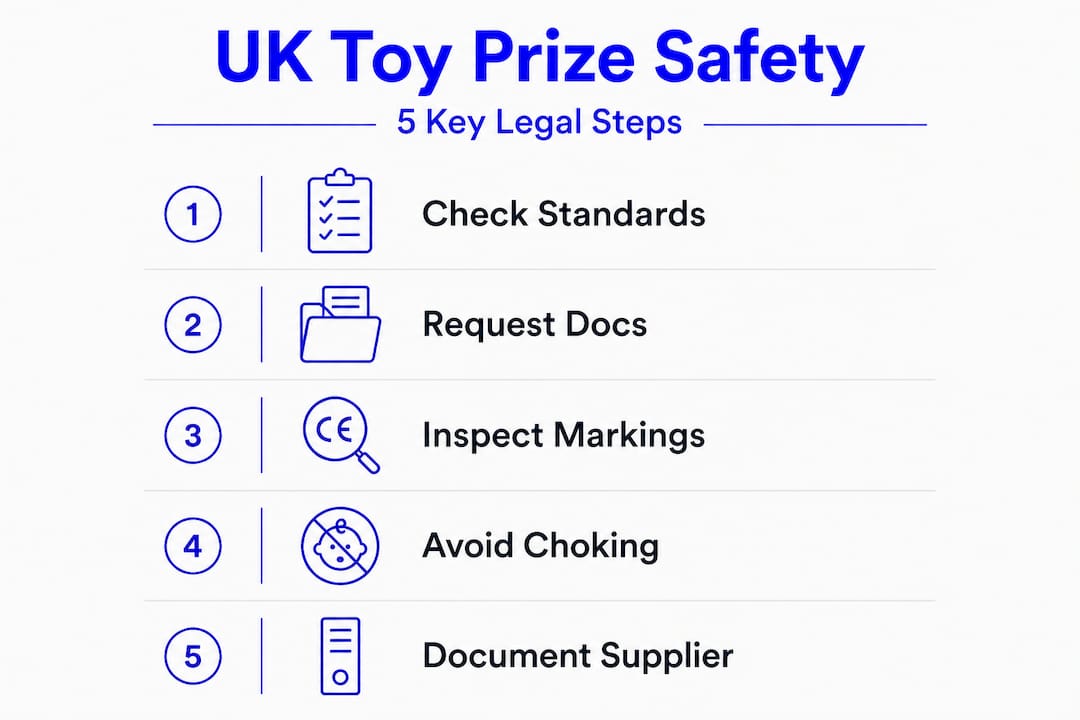
The main piece of legislation you need to know is the Toys (Safety) Regulations 2011. This covers all toys placed on the UK market, and it applies whether you’re selling them, giving them away in a party bag, or handing them out as raffle prizes. There are no loopholes for “it’s just a freebie.”
The technical standards that toys must be tested against are the EN 71 series. These cover:
- EN 71-1: Mechanical and physical properties (choking hazards, sharp edges)
- EN 71-2: Flammability
- EN 71-3: Migration of certain elements (chemicals and heavy metals)
UK toy safety standards were updated in 2026, so it’s worth double-checking that any supplier you use is referencing the most current version of these standards. Older stock or certificates from a few years ago may no longer be sufficient.
Here’s a quick comparison of what compliant versus non-compliant toys typically look like:
| Feature | Compliant toy | Non-compliant toy |
|---|---|---|
| Safety marking | UKCA or CE mark visible | No mark or fake mark |
| Documentation | Technical file available | No paperwork |
| Age labelling | Clear age warning on packaging | Missing or vague |
| Chemical testing | EN 71-3 certified | No chemical data |
| Choking hazard warning | Stated where applicable | Absent |
“Failure to comply with UK toy safety regulations can result in product recalls, significant fines, and reputational damage. For schools and event organisers, the stakes are even higher when children’s safety is directly involved.”
Pro Tip: Always request a copy of the Declaration of Conformity and the relevant test certificates from your supplier before placing a bulk order. A legitimate wholesaler will have these ready without hesitation. You can also use our toy selection checklist to make sure you’re covering every base, and our UKCA marked toys guide explains exactly what to look for on packaging.
Pitfalls to avoid: Common risks when sourcing cheap toy prizes
Understanding the official rules is only half of the story. The real-world market is filled with pitfalls for the unwary.
Let’s be honest. When you’re organising an event on a tight budget, the temptation to grab the cheapest bag of toys you can find online is very real. We get it. But here’s where things can go seriously wrong.
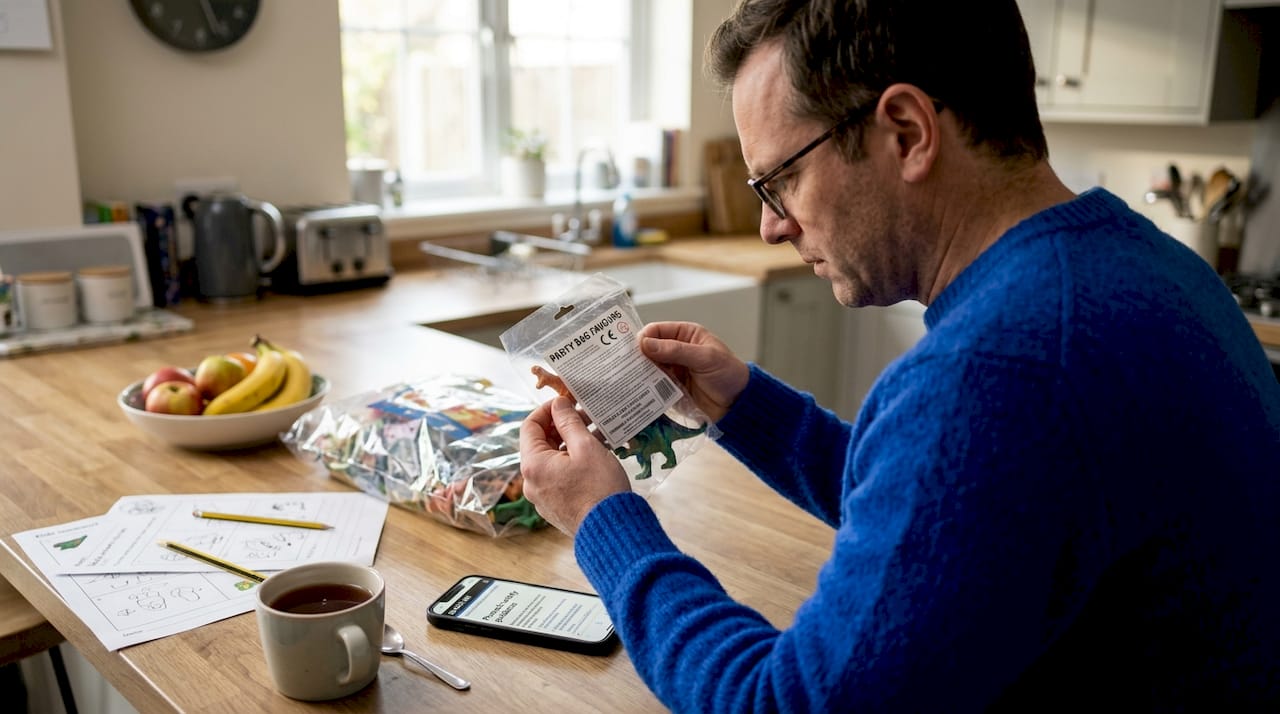
The BTHA’s testing found that 81% of toys sampled from UK online marketplaces failed at least one safety standard. That’s not a small margin of error. That’s the overwhelming majority. And many of those toys carried CE or conformity marks that turned out to be false or meaningless.
Here are the most common pitfalls to watch out for:
- Fake conformity marks: A CE mark printed on packaging doesn’t guarantee the toy has actually been tested. Counterfeit marks are rife on cheap imports.
- Small parts for young children: Toys with small detachable parts are a choking hazard for children under three. Age labelling must be accurate and visible.
- Missing or incorrect age warnings: EU and UK law requires specific warning symbols and text. If they’re absent, the toy is non-compliant.
- No supplier documentation: If a supplier can’t provide a Declaration of Conformity when asked, walk away.
- Buying from unverified marketplaces: Third-party sellers on large platforms often bypass the checks that established wholesalers must pass.
- Assuming ‘small’ means ‘safe’: A tiny toy can still contain harmful chemicals or present a choking risk. Size is irrelevant to compliance.
Pro Tip: Don’t assume a toy is legal just because it’s small, cheap, or sold alongside other legitimate products. The responsibility for distributing safe toys sits with you as the organiser or retailer, not just the original seller. Our affordable toys safety guide and advice on finding safe wholesale suppliers can help you navigate this confidently.
The reputational risk is real too. Imagine a parent finding a hazardous toy in their child’s party bag and tracing it back to your school fair or event. That’s not a conversation anyone wants to have.
How to use small toy prizes legally in UK raffles, events, and schools
With these risks in mind, here’s how to legally and safely organise prize distribution for UK events and schools.
This is where it gets a little more layered, because it’s not just about toy safety. How you give out prizes also has legal implications, particularly when tickets or draws are involved.
Here’s a numbered breakdown of the key things to get right:
- Understand the type of lottery you’re running. The law distinguishes between different types of prize draws, and the rules vary significantly depending on your setup.
- Check if your event qualifies as an incidental lottery. Licence-free incidental lotteries are allowed when the draw is part of a larger event, tickets are sold only at the event, and no profit is made from ticket sales alone.
- Don’t sell tickets in advance or online. This can change the legal classification of your draw and may require a licence.
- Keep prize values proportionate. Different raffle formats have different prize value limits, so check the specific rules for your event type.
- Schools and PTAs should take extra care. If you’re running a raffle as part of a school fundraiser, check whether your event structure is covered under incidental lottery rules or whether you need to register with your local authority.
Here’s a summary of the main raffle types and their rules:
| Raffle type | Licence needed? | Ticket sales | Prize limits |
|---|---|---|---|
| Incidental lottery | No | At the event only | No specific limit |
| Small society lottery | Yes (registration) | In advance allowed | Up to £20,000 |
| Private lottery | No | To members/employees only | No specific limit |
| Customer lottery | No | To customers on premises | No specific limit |
For market stalls and community events, our market stall toys guide has practical advice on how to structure your prize offerings within the rules.
Best practice tips for sourcing and managing small toy prizes
Finally, to ensure your efforts deliver both joy and compliance, follow these specialist tips for sourcing and handling small toy prizes.
Getting this right doesn’t have to be complicated. It just takes a bit of planning and the right supplier relationship. BTHA testing has shown that even toys carrying conformity marks can fail safety checks, which means your due diligence can’t stop at spotting a UKCA sticker on the box.
Here’s what best practice actually looks like:
- Buy from established wholesalers who can demonstrate their compliance processes, not just claim them.
- Request safety certifications before ordering, not after. A good supplier will share these proactively.
- Order samples first when trying a new product line. Check for sharp edges, small parts, and the quality of age labelling before committing to bulk quantities.
- Match toys to your audience’s age group. A toy suitable for a seven-year-old may be a hazard for a three-year-old. Know your crowd.
- Rotate your stock regularly. Kids notice when the prize table looks the same every year. Fresh novelty items keep the excitement alive.
- Keep records. Log your supplier details, product batch numbers, and the certificates you received. If a problem ever arises, this documentation is your protection.
- Store toys correctly. Damp or heat-damaged packaging can affect product integrity and make labelling illegible.
Our guide on sourcing affordable toys for children’s parties goes into even more detail on building a reliable sourcing process that keeps both your budget and your safeguarding responsibilities intact.
A fresh perspective: Why safety and suitability matter more than bargain pricing
Here’s the uncomfortable truth that most bulk-buying guides won’t say out loud. Cheap toy prizes aren’t just a potential safety risk. They’re often a false economy.
Think about it this way. You save £20 on a bag of unverified toys. One child has an adverse reaction to the chemical content. Or a parent complains to the school about a choking hazard. Or worse, a product recall is issued for the exact item you distributed at your event. The cost of managing that fallout, in time, stress, and reputation, far exceeds whatever you saved at the checkout.
There’s also a broader point about what bulk toy prizes represent in a community context. When a school hands out prizes at a fair, or a PTA organises a tombola, those toys carry an implicit message: we care about your children. Distributing unsafe or non-compliant items undermines that message, even if no harm ever occurs.
It’s also worth noting that lottery and raffle regulations are more nuanced than most organisers realise. Even a low-value prize draw can technically fall under gambling legislation depending on how tickets are sold. The assumption that “it’s just a small raffle” keeps many well-meaning organisers in murky legal territory.
Our view is this: treat your bulk toy purchases as part of your safeguarding duty. Not as a cost to minimise. The right supplier, the right documentation, and the right toys make your event safer, smoother, and far more enjoyable for everyone involved. And why cheap toys attract customers is a real phenomenon, but it only works when those toys are genuinely safe and legal. Affordable and compliant are not mutually exclusive. You just need to know where to look.
Find safe, suitable small toy prizes for every UK event
You’ve now got the knowledge. The next step is finding a supplier who makes it easy to put it into practice.
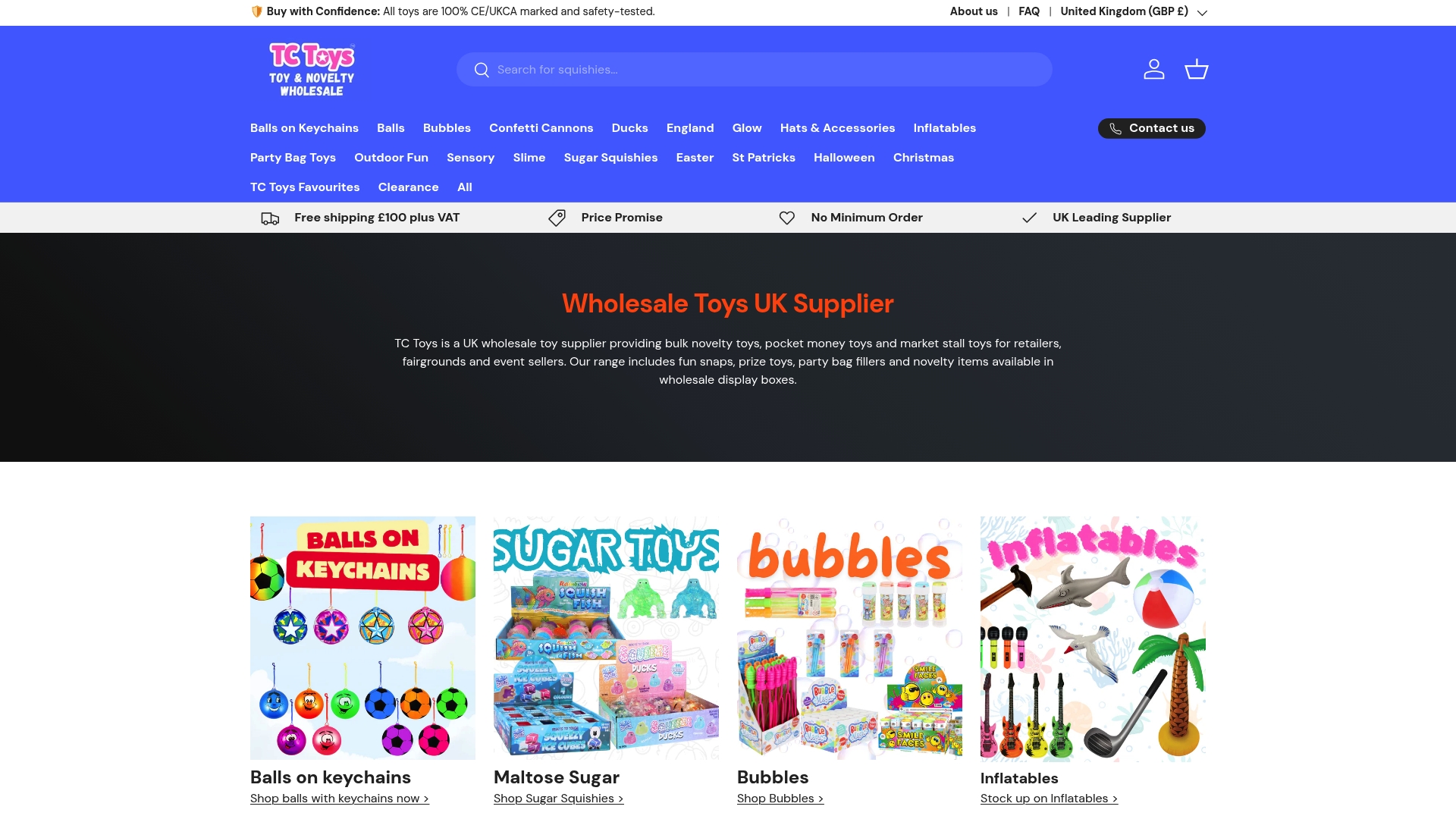
At TC Toys, every item in our range is CE/UKCA marked and safety-tested, so you’re not left guessing about compliance. We stock a wide selection of party bag toys perfect for school fairs and birthday celebrations, alongside a dedicated range of PTA event toys designed specifically for fundraising events and community occasions. Planning something seasonal? Our seasonal toy collections cover everything from Halloween to Easter with themed novelty items that children genuinely get excited about. No minimum order, fast UK delivery, and wholesale pricing. That’s the combination that makes compliance easy and events brilliant.
Frequently asked questions
Do I need a licence to give out small toy prizes at a fundraising event?
If your prize draw is incidental to another event and tickets are sold only at the event itself, you usually don’t need a licence. However, planned raffles or draws with advance ticket sales may require registration or a licence from your local authority.
What safety standards must small toy prizes meet in the UK?
Small toy prizes must comply with the Toys (Safety) Regulations 2011 and be tested against the relevant EN 71 standards covering mechanical safety, flammability, and chemical migration. These standards were updated in 2026, so always check your supplier’s certificates are current.
How can I check if a toy prize is truly safe?
Ask suppliers for UKCA or CE documentation, inspect packaging for compliance marks and batch numbers, and avoid toys with small parts for children under three. Remember that conformity marks alone are not a guarantee of safety, so request the underlying test certificates too.
Can I buy small toy prizes in bulk online and use them straight away?
Not without checking first. You should verify each item’s safety documentation before distributing, as 81% of toys tested from major UK online marketplaces failed safety standards in a recent BTHA survey. Buying from a verified wholesaler with documented compliance is a far safer approach.