

TL;DR:
- Nearly half of UK toy sales occur in a single quarter, mainly driven by seasonal demand.
- Effective planning, pricing, and flexible ranges are key to maximizing seasonal toy sales.
- Building inventory 6-10 weeks before peak seasons and monitoring trends boost profitability.
Nearly half of all UK toy sales happen in a single quarter, and the UK toy market has now reached £3.9bn, growing 3% year on year to August 2025. That’s not a coincidence. Seasonal toys are the engine behind those numbers, and if you’re a retailer, market stall holder, or event planner, understanding how they work could be the difference between a sell-out event and a stockroom full of unsold Halloween tat. This article breaks down exactly what seasonal toys are, what the market trends tell us, and how you can pick and stock them smartly to attract more customers and keep them coming back.
Table of Contents
- What are seasonal toys and why do they matter?
- Market trends: What drives seasonal toy sales in the UK?
- Types of seasonal toys and affordable options for any event
- How to plan, stock, and profit from seasonal toys
- A fresh perspective: What most UK retailers miss about seasonal toys
- Where to get affordable seasonal toys for your next event
- Frequently asked questions
Key Takeaways
| Point | Details |
|---|---|
| Seasonality drives UK sales | Nearly half of UK toy sales cluster around major holidays and events, making seasonal toys key for sales growth. |
| Affordable toys lead demand | Pocket-money toys under £10 account for most seasonal toy sales in event and retail settings. |
| Smart planning prevents losses | Accurate forecasting, flexible stock strategies, and timely ordering help minimise overstock and lost revenue. |
| Versatile toys boost event appeal | Choosing adaptable, low-cost toys maximises appeal and reduces post-event markdowns. |
What are seasonal toys and why do they matter?
Let’s start with the basics, because “seasonal toys” covers a lot of ground. These are products tied to holidays, seasons, or themed events, think Christmas inflatables, Halloween pumpkins, Easter bunnies, and summer beach sets. Demand spikes sharply around the relevant occasion, then drops off almost overnight. One week everyone wants skeleton print fidget toys; the next week, nobody cares.
That boom-and-bust pattern is both the opportunity and the challenge. Get the timing right, and seasonal toys practically sell themselves. Miss the window, and you’re left with stock that has nowhere to go.
Types of seasonal toys to know:
- Christmas: Advent calendar toys, festive inflatables, novelty gift sets, Christmas crackers, toy soldiers
- Halloween: Mini pumpkin toys, monster figures, glow-in-the-dark items, skeleton accessories
- Easter: Bunny toys, mini chick figures, Easter egg fillers, spring DIY craft kits
- Summer: Beach sets, water pistols, outdoor activity toys, foam rockets
- Party and event themed: Prize toys, party bag fillers, novelty items for fairs and school events
- New Year and seasonal: Themed novelties, countdown collectibles, winter activity sets
Market fact: Christmas alone accounts for nearly a quarter of annual UK toy sales, at roughly £0.9bn. When you factor in the full Q4 surge, the numbers climb even higher.
Understanding this range matters because your event or retail strategy should match the season you’re targeting. A school summer fair needs very different stock to a Halloween market stall. If you want a broader sense of what makes a toy work in a retail setting, our good retail toy guide is a solid starting point. And if you’re specifically selling at outdoor markets, the market stall toys guide is worth a read too.
Market trends: What drives seasonal toy sales in the UK?
With a better grasp of what seasonal toys are, it’s important to understand the UK market forces that make them so pivotal. Because knowing what to sell is one thing. Knowing why people buy, and when, is what lets you actually plan around it.
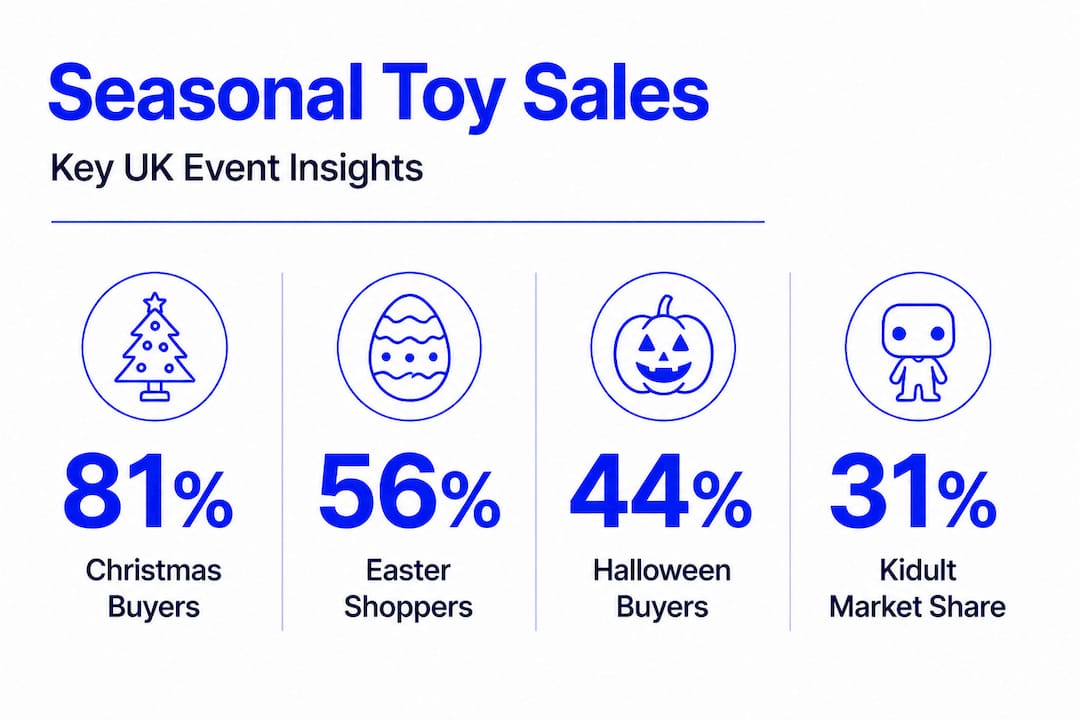
Here’s the big one: 81% of UK shoppers buy seasonal products for major holidays like Christmas, Halloween, and Easter. That’s a massive chunk of your customer base moving in predictable waves throughout the year. If you’re not stocking the right things at the right time, you’re handing sales to someone else.
“Price is the number one factor for British shoppers ahead of Christmas, with 67% citing cost as decisive.”
That quote should shape every buying decision you make. Price matters more than novelty, more than branding, and more than fancy packaging. Affordable, good-value seasonal toys win. Full stop.
What UK shoppers look for when buying seasonal toys:
- Price: 67% say cost is the decisive factor
- Availability: If it’s not in stock, they’ll buy elsewhere
- Relevance: It must feel connected to the occasion
- Safety: Parents and event planners prioritise CE and UKCA marked products
- Fun factor: The “ooh” moment at the point of purchase drives impulse buys
| Seasonal occasion | % of shoppers who buy | Key product types |
|---|---|---|
| Christmas | 81% | Advent fillers, novelties, crackers |
| Halloween | 64% | Costumes, mini toys, glow items |
| Easter | 58% | Egg fillers, bunny toys, spring kits |
| Summer events | 47% | Outdoor toys, water play, inflatables |
| School fairs/parties | 41% | Prize toys, party bag fillers |
The table above tells you something really useful: Christmas is massive, but Easter, Halloween, and summer events represent real volume too. Planners who chase only the Christmas rush leave a lot of money on the table across the rest of the year.
For practical buying advice, our guide to smart toy buying choices covers how to prioritise your spend. And if you’re wondering whether price-point really does drive footfall, our piece on attracting customers with cheap toys makes the case clearly.
Types of seasonal toys and affordable options for any event
Knowing who buys and when, let’s look at the main types of seasonal toys and practical price options for UK events. The good news? You don’t need to spend a fortune to create a cracking stall or event display.
Pocket-money toys under £10 consistently drive between 30% and 80% of sales at events, depending on the setting. These are your party bag fillers, mini novelties, and small themed items that kids can buy themselves or parents pick up without hesitation.
Most popular seasonal toy categories for events and retail:
- Inflatables: Easy to display, high visual impact, great for summer and Christmas
- DIY and craft kits: Popular for Easter and winter events, longer engagement time for kids
- Mini collectibles and figures: Evergreen appeal with seasonal dressing; easy to theme
- Themed costumes and accessories: Big at Halloween and fancy dress events
- Party bag fillers: High volume, low unit cost, perfect for school and community events
- Fun snaps and novelty items: Instant crowd-pleasers at fairs and outdoor markets
| Toy type | Seasonal fit | Price bracket | Best for |
|---|---|---|---|
| Inflatables | Christmas, summer, Easter | £1 to £8 per unit | Market stalls, fairs |
| Party bag fillers | All year, peaks at Christmas | Under £1 per unit | Schools, parties |
| DIY craft kits | Easter, winter | £2 to £10 | Community events |
| Novelty collectibles | Halloween, Christmas | £1 to £5 | Prize stalls, shops |
| Outdoor toys | Summer | £3 to £15 | Fairs, outdoor events |
Pro Tip: Opt for gender-neutral, versatile items wherever you can. A foam rocket or a mini craft kit appeals to a broad age range and works across multiple occasions. Stock those items in larger quantities, and reserve the more niche stuff for targeted seasonal drops.
When it comes to sourcing affordable toys at wholesale prices, it pays to work with a specialist who already understands the seasonal cycle. You want CE and UKCA-marked stock that’s event-ready and compliant, not something you have to second-guess at the point of sale.
How to plan, stock, and profit from seasonal toys
With an understanding of toy types and pricing, let’s look at how retailers and planners can stock and sell seasonal toys for maximum event and sales impact. Because the biggest mistake we see? People order too late, or they order the wrong things in the wrong quantities.

Here’s the reality. Retailers who build seasonal inventory 6 to 10 weeks before the seasonal peak consistently outperform those who scramble last minute. That timeline gives you room to assess what’s selling early, reorder bestsellers, and return or reroute anything that isn’t moving.
A practical seasonal toy planning process:
- Forecast demand using past data. Look at what sold well in previous years for the same occasion. Which lines moved fast? Which sat around?
- Place initial orders 8 to 10 weeks out. Get your core range confirmed early, especially for Christmas and Halloween where competition is highest.
- Set a reorder trigger. If a product drops below a set quantity before peak week, reorder automatically rather than waiting to see what happens.
- Track sell-through rates weekly. Aim for a sell-through rate above 70% by the end of the peak period. Below that, you’ve likely over-ordered.
- Prepare overflow storage. During Christmas and Halloween in particular, overflow storage of 10 to 20 days’ cover keeps your picking clean and your main space functional.
- Plan your post-season markdown strategy. Decide upfront what discount level you’ll apply to clearance stock rather than making it up on the fly.
“Overstock clogs your picking area and kills efficiency. Understock quietly loses you around 12% of potential revenue in peak weeks.”
That’s a painful trade-off either way. The solution isn’t to play it safe and order less. It’s to use data intelligently and build a range that has flexibility built in. Versatile items that aren’t locked to a single occasion give you more room to manoeuvre.
Pro Tip: Keep a small buffer of unbranded or lightly themed novelty toys that work across multiple seasons. If one event undersells and another overperforms, you can redirect your stock without writing anything off.
For guidance on balancing safety compliance with sales performance, our sales and safety guide walks you through the key considerations. And before your next event, running through our toy selection checklist could save you a headache or two.
A fresh perspective: What most UK retailers miss about seasonal toys
Having outlined how to execute a successful seasonal toy strategy, here’s our honest take on what separates thriving retailers from those left with a box of unsold Easter chicks in May.
Most retailers are terrified of overstock. That fear is understandable, but it leads them to play it too safe. The real danger isn’t having a few extra units left over. It’s completely missing a viral trend because you didn’t have the range or the courage to back it. Last-minute novelties go from zero to sold-out in days when something captures the public imagination, and cautious buyers miss those moments entirely.
The savviest retailers we see aren’t just planning around known seasons. They’re building flexible ranges that can pivot. They’re watching social media, tracking what’s moving in competitor shops, and keeping a little open budget for reactive buying. That agility is worth more than the tightest forecast spreadsheet.
Here’s something most people overlook: the kidult market in the UK is now worth £1.2bn, representing 31% of total toy spend. Adults buying toys for themselves or as novelty gifts is no longer a niche behaviour. It’s mainstream. Event planners who factor this in, stocking slightly more sophisticated novelties and collectibles alongside the kids’ fare, often outperform those who cater exclusively to children.
Building sets and collectibles are driving 18% and 17% growth respectively in the UK market right now. That’s not just a Christmas trend. It runs across Easter, summer events, and themed parties. If you’re only thinking about seasonal toys as cheap giveaways and party bag fillers, you’re leaving a genuinely profitable segment untapped.
And here’s the part we feel most strongly about. “Those who see seasonal toys only as quick wins miss the repeat custom and loyalty they build for next year’s events.” A child who picks up a brilliant Easter toy at your stall remembers that. Their parent remembers which stall had the good stuff. That repeat footfall is your real return on investment, and it doesn’t show up on a sell-through spreadsheet.
Data-driven planning matters enormously, but so does knowing your community and your customers. The best seasonal toy buyers blend both. For a broader view of what shapes UK retail toy buying, our B2B toy market insights article is worth bookmarking.
Where to get affordable seasonal toys for your next event
Ready to put all this into practice? We’ve got you covered with collections built specifically for UK retailers and event planners who need great products, fast delivery, and prices that make sense for bulk buying.
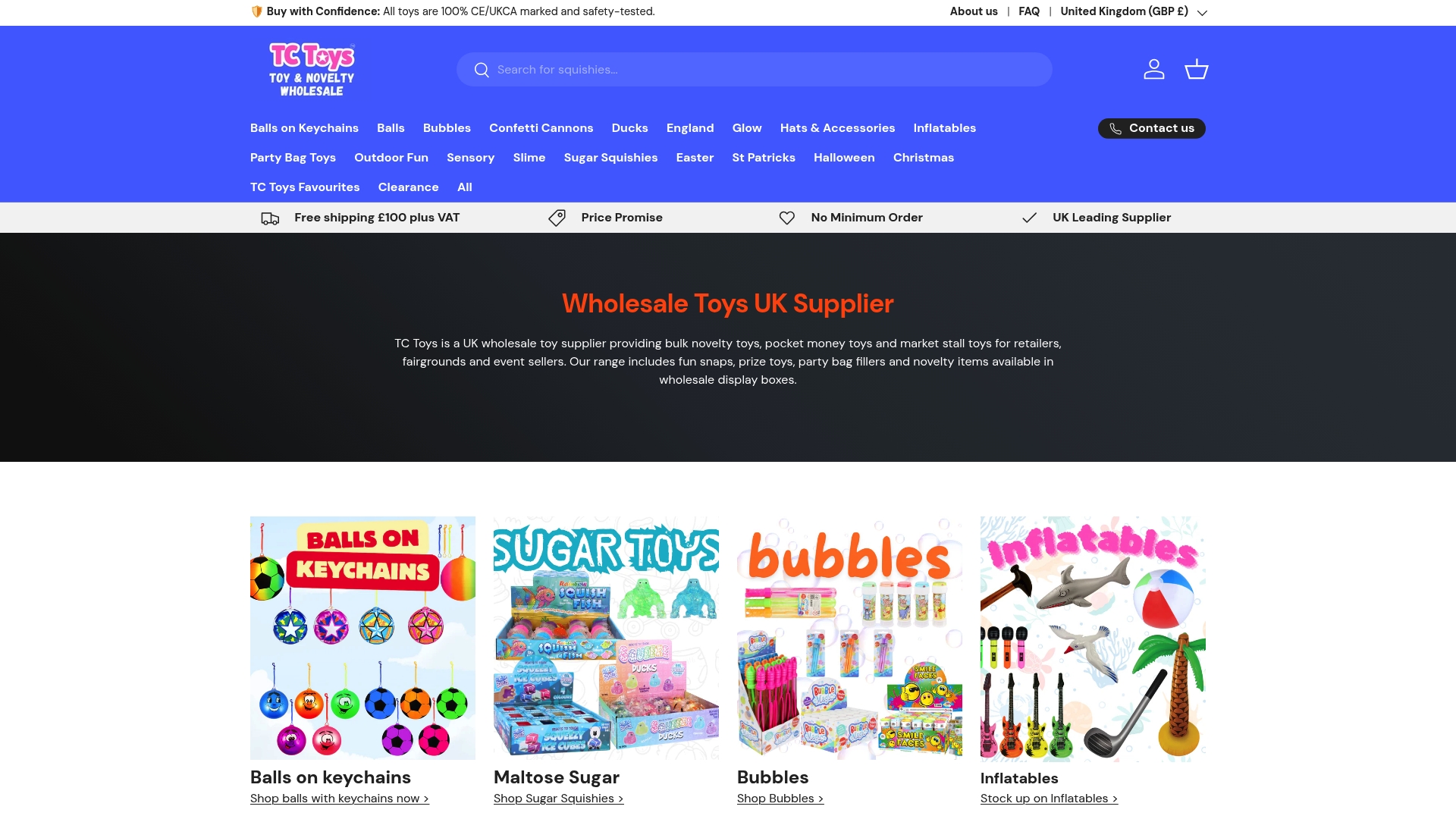
Browse our seasonal collections for curated ranges across every major holiday and occasion, all CE and UKCA marked and event-ready. If party bags are your priority, our party bag toys range is packed with affordable, crowd-pleasing options that kids absolutely love. And with Easter always coming around faster than you’d think, stock up early through our Easter toys and prizes collection before the best lines sell out. No minimum order, fast UK delivery, and wholesale pricing throughout. You’ve got this.
Frequently asked questions
What are the most popular seasonal toys for UK events?
Inflatables, party bag mini-toys, DIY craft sets, and themed collectibles are consistently top sellers for UK holiday and seasonal events, covering everything from Christmas inflatables to Easter bunnies and summer beach sets.
How far in advance should retailers stock seasonal toys?
Retailers should build seasonal inventory 6 to 10 weeks before the seasonal peak to maximise sell-through rates and avoid the cost of last-minute stockouts.
What price range works best for event-focused seasonal toys?
Pocket-money toys under £10 drive the highest volume at events, while affordable options under £50 dominate the broader UK seasonal toy market and suit most retail and event budgets.
What are the risks in stocking seasonal toys?
The main risks are overstock leading to dead stock and understock quietly losing around 12% revenue during peak periods, alongside unpredictable viral trends and the need for overflow storage during high-demand seasons.